
Leadership in the UAE
The traits that separate a manager from a real leader
Ask ten people in Dubai or Abu Dhabi what makes a good boss and you will get ten different answers. Some point to charisma, others to technical skill, others to the ability to close deals with government clients. But when you watch teams over years, not months, a smaller set of qualities keeps showing up in the leaders whose people stay, grow and deliver. This article compares the effective leader against the merely competent manager, so you can see the gap clearly and decide which side of it you want to be on.
Effective leader vs. average manager
- Owns the team’s result, wins and losses
- Stays calm when a project slips or a client pushes back
- Gets involved when a colleague is stuck, without taking over
- Praises specific work publicly, corrects mistakes privately
- Mediates conflict early, before it hardens
- Explains the why behind a decision, not only the what
- Points at team members when results miss the mark
- Reacts to pressure with panic or blame
- Delegates and then disappears until the deadline
- Gives vague praise, saves criticism for the annual review
- Lets tension between colleagues simmer
- Repeats instructions without context
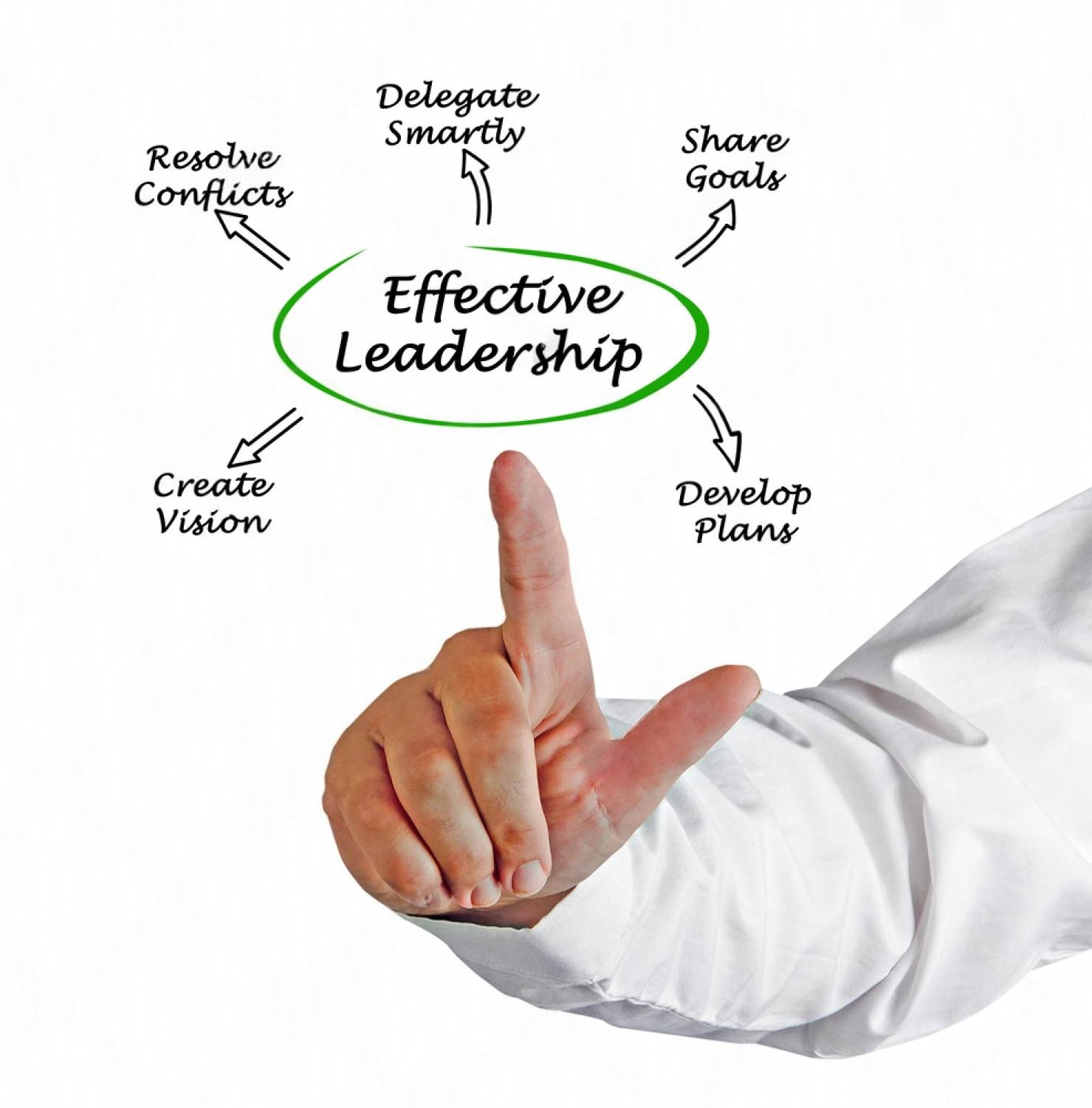
Quality one
Ownership of the whole result
The first thing that sets an effective leader apart is a very high sense of responsibility. They take ownership not only for their own tasks but for the work of every person on the team. If a deliverable slips, they do not open the meeting with a list of who failed. They open with what the team missed and what they will change next time.
This matters in a market like the UAE, where projects often move fast, cross several nationalities and involve clients who expect a single point of accountability. A leader who is willing to stand in front of a difficult conversation, absorb the pressure and then work with the team to fix the underlying issue builds trust that no title or bonus can buy. Structured programs from established leadership consulting firms in the region often measure exactly this trait first, because it predicts almost everything else.
Composure when things get hard
Every company hits rough weeks. A key hire resigns, a client freezes payment, a system goes down the day before a launch. The difference between a team that recovers in 48 hours and one that spirals for a month usually comes down to the person at the top. A calm leader does not pretend the problem is small. They name it, break it into pieces, hand out clear next steps and keep their tone steady. That composure spreads. According to work summarised by the Harvard Business Review the ability to regulate emotion under stress is one of the strongest predictors of long-term managerial performance.
The opposite also spreads. A manager who raises their voice, sends anxious late-night messages or visibly panics teaches the team that the situation is out of control, even when it is not. In multicultural offices across the Emirates, where people read tone as much as words, composure is not a soft skill. It is operational infrastructure.
“If you want to know whether someone can lead, watch them on the worst day of the quarter, not the best one.”

Quality three
Engagement without micromanagement
Effective leaders stay close to the work. They know what each person is currently blocked on, they answer questions about grey-area decisions, and they step in when a situation needs someone with more authority. What they do not do is hover, rewrite emails or approve every small step. The distinction is simple: they are available, not intrusive.
- Available means a team member can walk into your office, or ping you on Teams, and get a real answer within the day.
- Intrusive means checking in every two hours and asking for status updates the person has to stop working to write.
- Engaged means knowing the client, the constraints and the history well enough to unblock a decision in five minutes.
Honesty that respects the person
Praise that lands
A good leader gives credit specifically and in public. Not “good job team” in a group email, but “Aisha rewrote the pricing model in two days and it is the reason we won the tender.” That kind of praise tells the whole team what excellent looks like.
Correction that helps
The same leader points out mistakes clearly, in private, and links each one to what to do differently next time. They do not soften the feedback until it disappears, and they do not use it to score points. The goal is the person’s next attempt, not their humiliation.
When to lead from the front, when to lead from behind
There are two moments most managers get wrong. The first is a crisis. The instinct is to step back and let the team “own it,” but a crisis is exactly when people need a leader visibly in the room, making calls and taking the heat. Lead from the front here.
The second is day-to-day execution. The instinct is to jump in and prove you can still do the work. But if your senior designer or account manager is competent, doing their job for them signals that you do not trust them. Lead from behind here: set the direction, remove obstacles, and let them ship.
Reading which mode a moment calls for is one of the most useful skills a leader can develop, and it usually takes several years of practice to get right.
Building these qualities on purpose
None of the traits above are fixed at birth. Ownership grows when you deliberately volunteer to be the accountable name on a project. Composure grows when you slow your response by ten seconds before reacting to bad news. Honest feedback grows when you commit to giving one specific piece of praise and one specific correction each week. Small habits compound.
The leaders I have watched improve the fastest in the UAE all did the same three things: they asked for direct feedback from their team twice a year, they had at least one mentor outside their own company, and they kept a short written record of decisions they made under pressure so they could review them later. That is not glamorous, but it works.
Frequently asked questions
What is the single most important quality of an effective leader?
If forced to pick one, most experienced executives say ownership. A leader who genuinely takes responsibility for the team’s outcome, both good and bad, tends to develop the other qualities over time. Without that foundation, skills like communication or strategy rarely translate into results.
Can leadership qualities be learned, or are people born with them?
Most of them can be learned. Traits like composure, active listening and honest feedback improve with deliberate practice, coaching and honest self-review. A few personality factors, such as baseline extroversion, are harder to shift, but effective leaders come from every temperament type.
Structured leadership assessments and 360-degree feedback are common tools used in the UAE to give managers a clear starting point.
How is leadership different in the UAE compared to Western markets?
The core qualities are universal, but the context matters. Teams in the UAE are usually highly multicultural, with employees from South Asia, the Middle East, Europe, Africa and beyond working side by side. Effective leaders here are especially strong on cultural awareness, clear written communication and mediating small misunderstandings before they escalate.
There is also a stronger emphasis on relationships and long-term trust with clients and partners, which rewards leaders who are patient and consistent.
How can I tell if my current manager is actually an effective leader?
Watch how they behave under pressure. Do they stay calm and specific, or do they get loud and vague? Notice how they give feedback. Is criticism private and constructive, or public and personal? Look at what happens when a project fails. Do they own it in front of the client, or do they name a scapegoat?
Also pay attention to retention. Effective leaders tend to hold on to their strongest people for years.
What is the fastest way to develop stronger leadership skills?
Three things move the needle quickly. First, ask your direct reports for anonymous feedback and actually read it. Second, find a mentor who is at least one level above where you want to be and meet them monthly. Third, keep a short journal of decisions you make under stress and review it every quarter to spot patterns.
How do effective leaders handle conflict between team members?
They address it early, before positions harden. That usually means a private one-on-one with each person to understand the real issue, then a joint conversation focused on the work, not the personalities. They do not take sides publicly, and they do not let the conflict fester in the hope it will resolve itself.

I am a powerful force in the workplace and use my positive attitude and tireless energy to help others work hard and achieve success.